About Kintsugi Australia
We are a team that teaches traditional and modern Kintsugi at our Sydney CBD studio, and travels to hold courses in other cities. We also sell some Kintsugi arts.
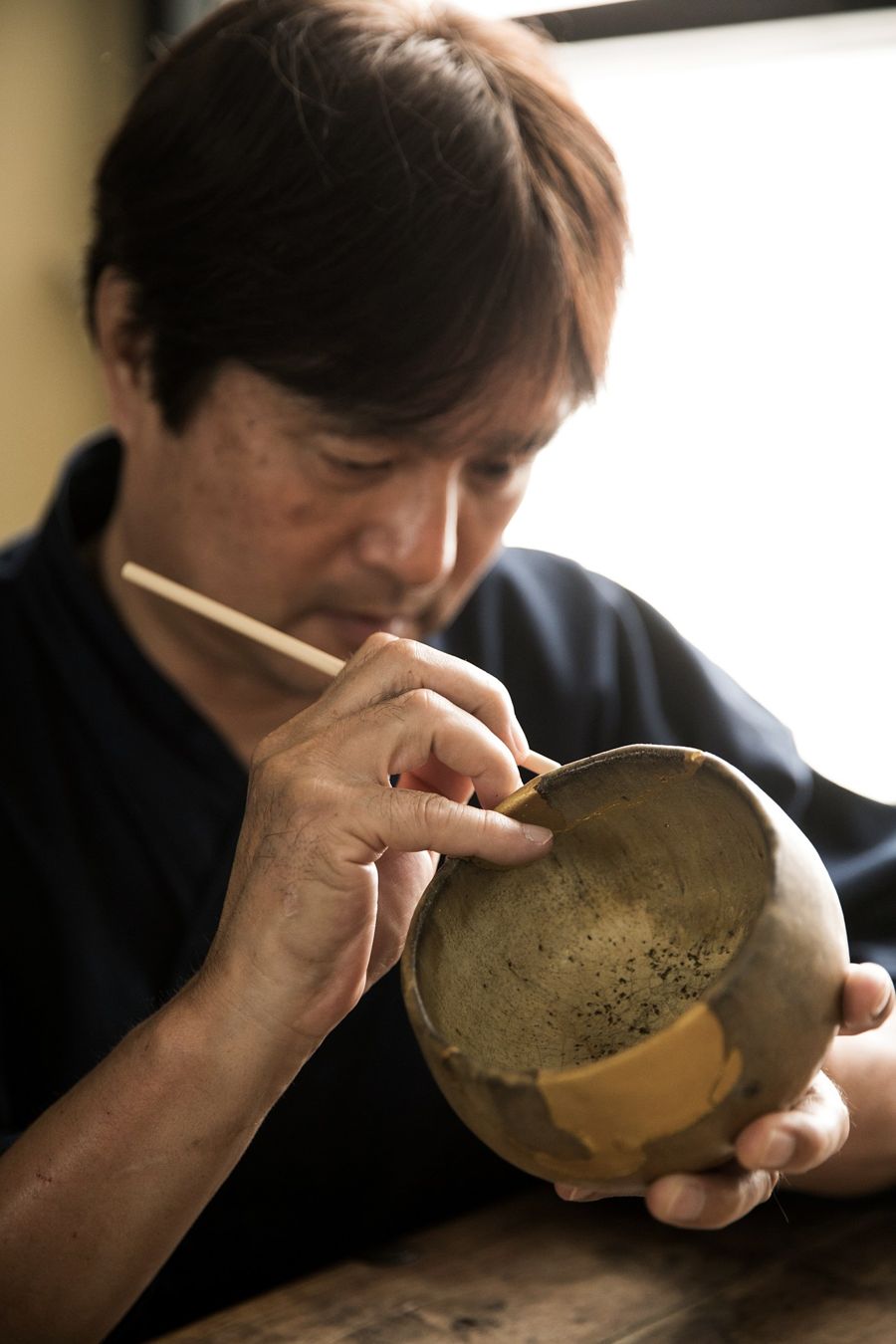
From a restaurant kitchen to the art of gold
- 1959Born in Tokyo
- 1984First came to Australia
- 1987Migrated as a qualified cook
- 2008Owned a busy Japanese restaurant
- 2015Began learning Kintsugi seriously
- 2017Sold the restaurant, a year in Japan
- 2018Founded Kintsugi Australia
Jun was born in Tokyo in 1959, and came to Australia in 1984. He stayed a year and became a fan of Australia. After he went back to Japan, he took the national qualification of a cook, then migrated to Australia in 1987. One of the reasons he decided to move was because he wanted Australians to know more about Japan, Japanese culture, especially Japanese food. Jun's dream came true in 2008, when he finally owned a busy Japanese restaurant.
He came across the art of Kintsugi when he watched Japanese TV. At that time many plates were broken in his restaurant, and he thought Kintsugi was a good way to repair them! During his self-study of Kintsugi, he was also fascinated by its philosophy.
“We can repair not only broken objects, but also deep sorrow, a broken heart, relationships, our health by something else. Kintsugi is just like our life, exactly the same!”
He bought a Kintsugi kit online and tried it himself, but the result was not satisfying enough. He looked for a Kintsugi master in Australia but couldn't find any, so he decided to go to Japan to learn. He went to Japan 2–3 times a year and began learning Kintsugi seriously in 2015.
Jun sold his restaurant in 2017 and flew to Japan to pursue the art of Kintsugi for one year. He has been studying under 5 different Masters of Kintsugi across Japan since 2015. Interestingly, each master has a different approach and uses slightly different techniques. He also found he couldn't get the materials here in Australia, so he put some materials together, studied, and established his own method.
In 2018, he founded Kintsugi Australia to spread the knowledge and beauty of Kintsugi to Aussies and the world.
Jun trained with five Kintsugi masters in Kanazawa and Tokyo. He is a lecturer at the Sydney Community College Kintsugi workshop, and his works “Kibou” and “Negai” were displayed at the Sydney Adventist Hospital’s Cardiac Rehabilitation Department to show that scars can become beautiful.
Our teachers
- JunTraditional Kintsugi Course, Beginner’s workshop and Kintsugi Dojo
- HitomiBeginner’s and Accessory workshops
- MiyokoTraditional Kintsugi, Beginner’s and Accessory workshops
- AkkiBeginner’s workshop
- HisaeBeginner’s workshop
Kintsugi history
Kintsugi is the unique and traditional Japanese art of repairing broken, chipped and cracked pottery using lacquer and gold. It makes use of many lacquer crafts, one of which is “Makie”, which grew alongside the tea ceremony and its belief in the beauty of imperfection. Many repaired pieces are seen at museums and recognised as treasured antiques and cultural assets.
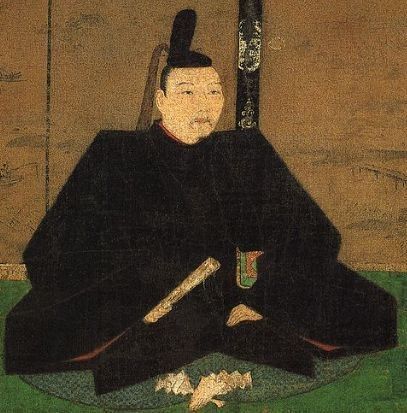
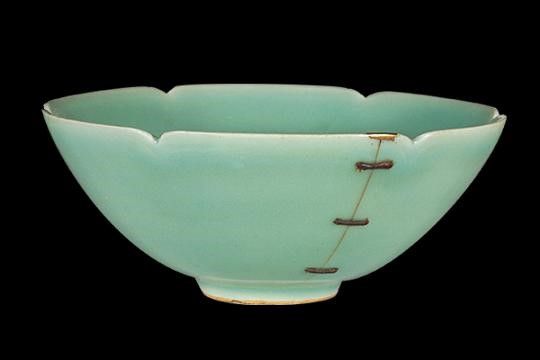
It dates back to the Muromachi period (1338–1573), when Yoshimasa Ashikaga, the 8th Shogun of the Ashikaga shogunate, found a crack on his treasured Matcha bowl. He sent it to China to be repaired, but no one had the skill to repair cracked pottery, so the piece came back with a clamp on it.
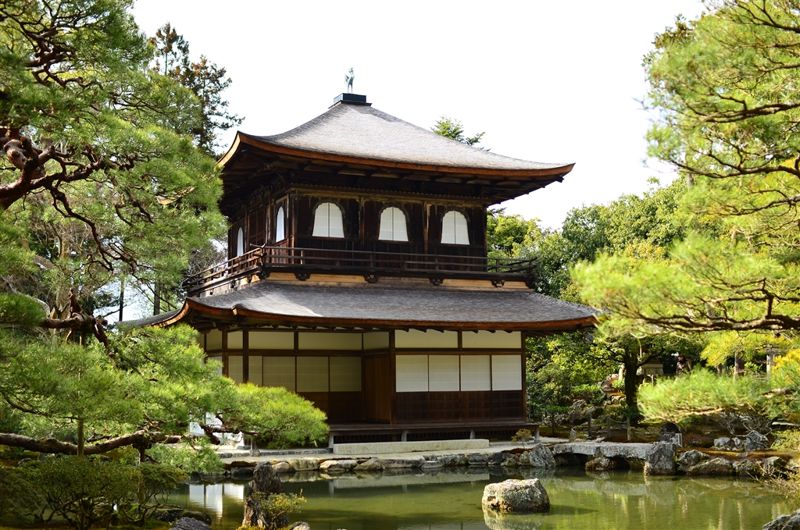
Yoshimasa was not pleased with the appearance, so he ordered the craftsmen to find a better way to repair cracked pottery. This is said to be the beginning of Kintsugi in Japan. He took barely any responsibilities in politics, but you could say he played an important role in shaping Japanese culture. The Ginkakuji temple in Kyoto was built by Yoshimasa in 1490.
In the media
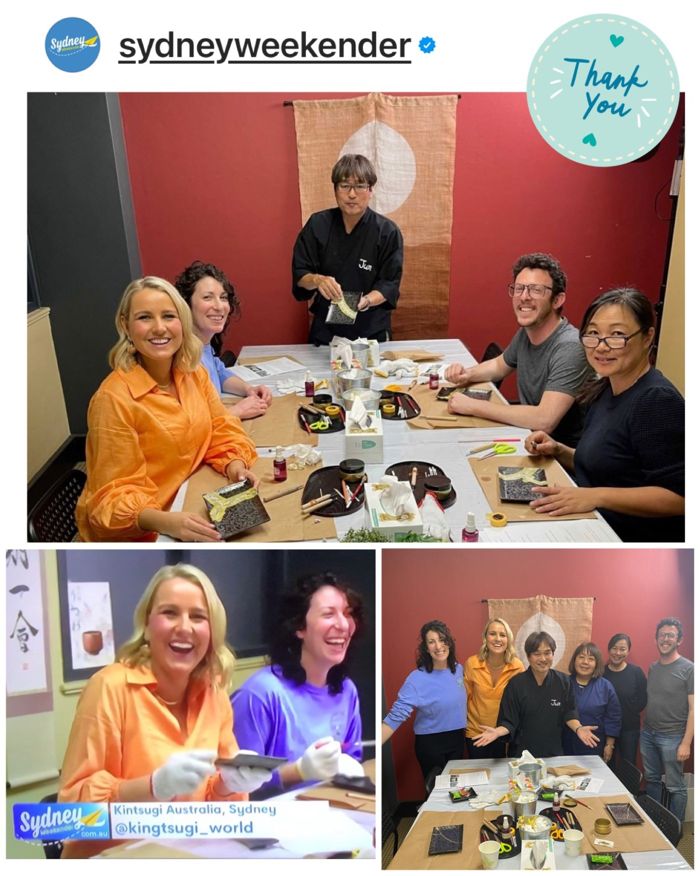
Sydney Weekender · Channel 7
18 July 2021
Jun presented a Kintsugi lesson.
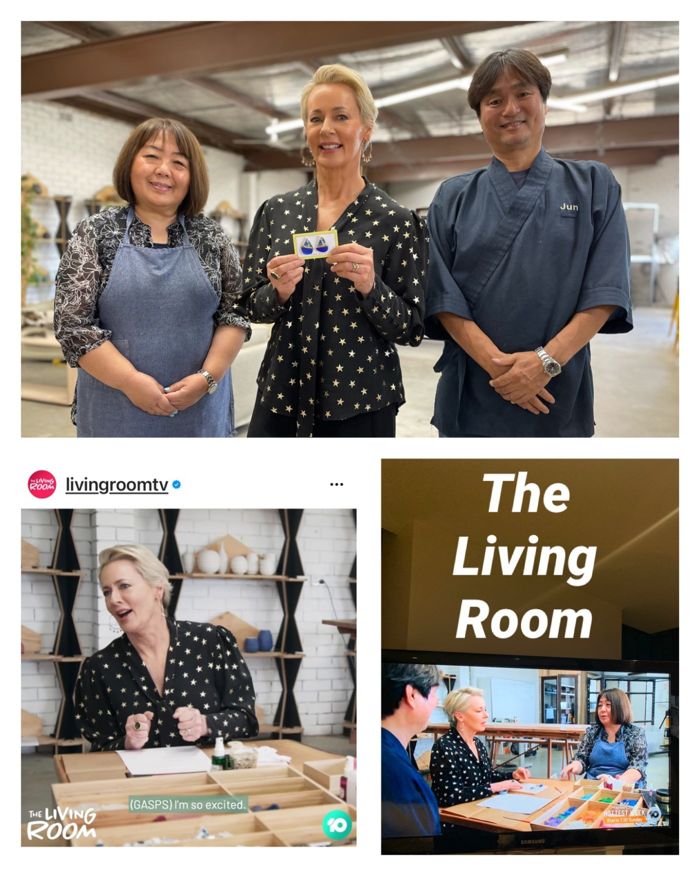
The Living Room · Channel 10
21 May 2021
Hitomi and Jun presented a Kintsugi Accessory lesson to Amanda.
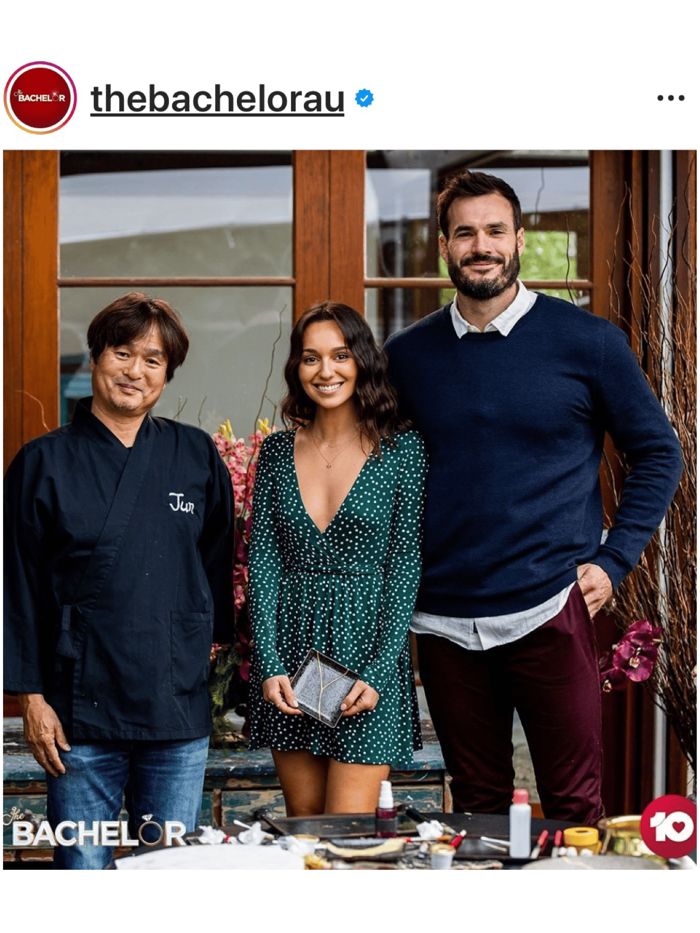
The Bachelor Australia · Channel 10
17 Sep 2020
Jun presented a Kintsugi lesson to Bella and Locky.
- SBS · interview video↗
- SBS · “Damaged goods”: article about Jun & Kintsugi↗
- ABC · “Kintsugi is beautiful” (30 Dec 2018)↗
- ELLE DECOR (Spain) · official site↗
- SBS Japanese radio · interview with Jun (in Japanese)↗
For all enquiries, including media, please email kintsugi2000@gmail.com. It may be difficult to answer calls during class hours.